As the holiday season approaches, many restaurants, caterers, hotels, schools, churches, and institutional kitchens are eagerly anticipating outdoor gatherings, private events, and busy dining rooms filled with seasonal meals. However, higher cooking volume also increases the importance of preventative fire suppression planning.
Before November and December schedules become difficult to adjust, kitchen managers should prioritize an Ansul system inspection and confirm that the system, documentation, and surrounding equipment are ready for sustained operation. A planned inspection gives your team time to correct coverage issues, replace worn components, and address documentation gaps before they interfere with service.
For commercial kitchens in Fort Wayne, a local inspection provider can also help coordinate repairs and follow-up work without requiring multiple vendors.
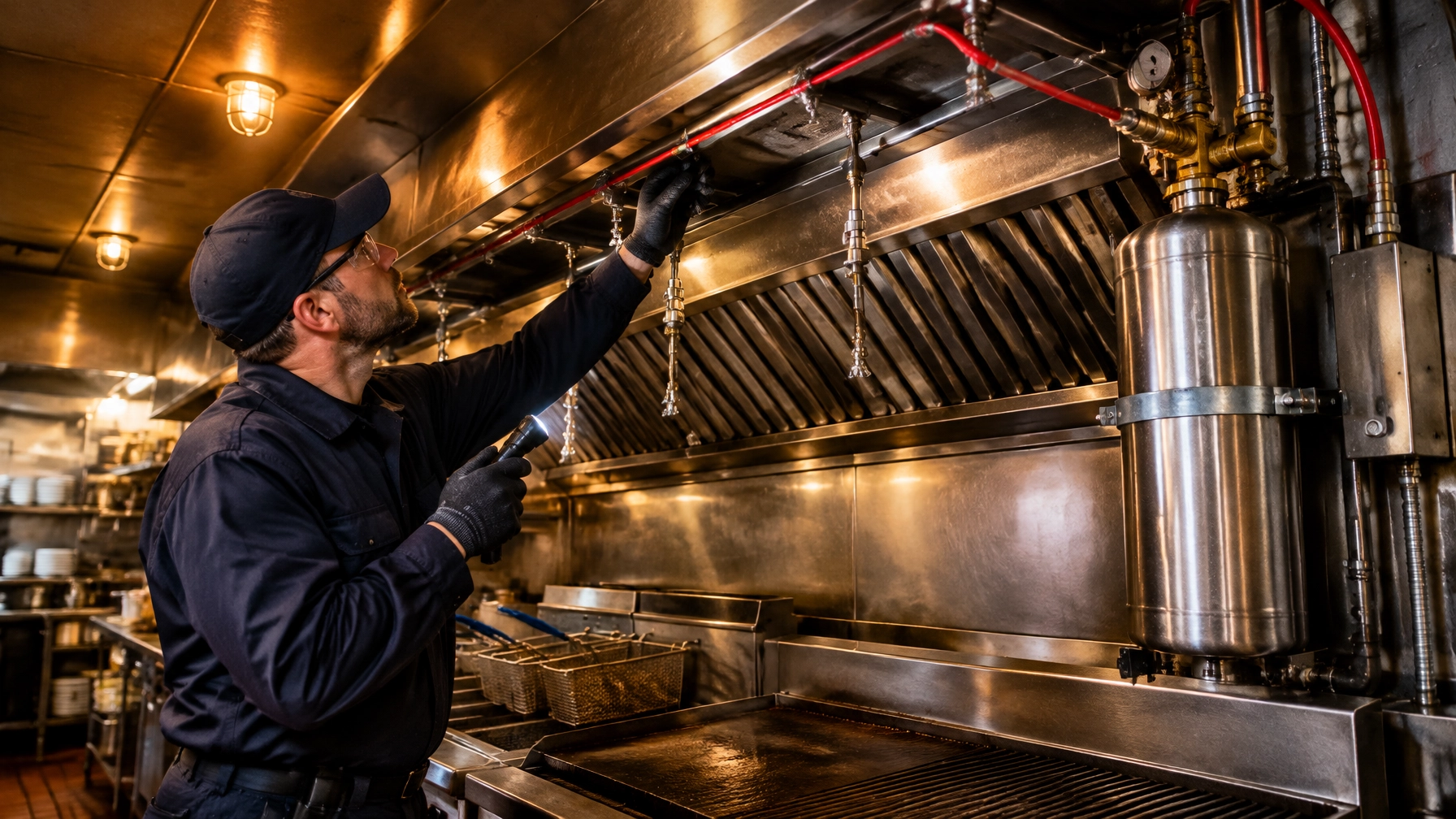
An Ansul system inspection is a professional evaluation of a commercial kitchen’s wet-chemical fire suppression system. The system is designed to detect and suppress fires involving cooking appliances, grease, hoods, plenums, and exhaust ducts.
A complete fire suppression system inspection is more than checking a pressure gauge or looking at the service tag. A qualified technician reviews the system’s operating condition, confirms that the installed equipment still matches the kitchen layout, tests required components, and documents any deficiencies.
Depending on the system and manufacturer requirements, an inspection may include:
The inspection should be completed according to the manufacturer’s instructions and applicable fire protection requirements. Many commercial kitchen systems require service twice each year, although the correct schedule depends on the system design, equipment, use, and local requirements.
Learn more about TJ Nowak Supply’s fire protection services or request fire protection service before your holiday schedule becomes difficult to change.

For kitchens expecting higher activity in November and December, early October is a practical scheduling target. Booking service several weeks before the holiday volume spike allows time for:
Waiting until the week before Thanksgiving can limit scheduling options, particularly if multiple restaurants and food-service facilities are requesting service at the same time. A last-minute appointment may still be possible, but planned service generally provides better control over timing and cost.
Kitchen managers should schedule an inspection sooner if:
A system designed for the original kitchen layout may not provide proper protection after equipment changes. Even a small appliance relocation can affect nozzle alignment and coverage.
Nozzle coverage is one of the most important items to review before the holiday cooking rush. The technician should compare the installed appliance arrangement with the system’s original design documentation.
Verify that:
Do not move nozzles or modify the detection system yourself. Changes should be evaluated and completed by a qualified fire suppression professional.

Nozzles must remain clear so the suppression agent can discharge as designed. Kitchen staff can perform a visual check for heavy grease buildup, physical damage, corrosion, or missing caps, but they should not disassemble or clean system components unless instructed by the service provider.
Also inspect the visible condition of:
These visual checks do not replace professional service. They help managers identify conditions that should be reported when scheduling the inspection.
The manual pull station should be visible, labeled, and accessible to trained staff. Boxes, beverage cases, cleaning supplies, or temporary holiday decorations should not block it.
Management should also confirm that employees know where the pull station is located and understand the site’s emergency procedures. Actual system testing must be performed by trained personnel using the appropriate process.
When the suppression system activates, connected gas and electrical equipment should shut down as designed. During the inspection, the technician should verify the relevant interlocks and document the results.
This is particularly important after:
A system may appear normal while an improperly modified interlock prevents the cooking equipment from shutting down correctly.
Have the following information available:
Organized records help the technician compare the current installation with the intended design. They also make it easier for a manager, property owner, insurer, or fire official to confirm that required service has been completed.
Commercial kitchen operators commonly run into preventable issues when they wait too long to schedule service.
A current tag is important, but it does not explain whether equipment has been moved, nozzles are obstructed, or interlocks function correctly. The inspection should evaluate the complete system.
Seasonal cooking equipment, additional fryers, warming units, or temporary appliances can change the hazard arrangement. Before adding equipment beneath a protected hood, ask whether the existing system requires redesign or modification.
Temporary storage and holiday decorations often find their way into crowded kitchen areas. Keep pull stations accessible and maintain clear nozzle discharge paths.
The kitchen suppression system and Class K extinguisher serve related but separate roles. Confirm the extinguisher is present, properly mounted, accessible, and current on its service requirements.
A deficiency found during a busy season may require parts, repair work, or a return visit. Booking preventative service early gives your operation more options and reduces the chance that a repair will conflict with peak service hours.
The cost of an Ansul system inspection depends on the system type, number of appliances, kitchen size, inspection history, travel requirements, and whether repairs or replacement components are needed. A simple inspection with no deficiencies will generally cost less than service that includes nozzle changes, fusible link replacement, agent recharge, interlock repairs, or system modifications.
TJ Nowak Supply can review your kitchen configuration and provide a service estimate based on the actual system rather than quoting a one-size-fits-all price. Ask about the inspection cost, potential repair charges, and any follow-up requirements when scheduling.
For urgent needs, same-day service or dispatch may be available depending on technician availability and the scope of work. Planned appointments should be scheduled as early as possible, particularly for commercial kitchens preparing for the November and December volume increase.
TJ Nowak Supply is a family-owned, Fort Wayne-based provider serving commercial kitchens and businesses throughout Northern Indiana. Since 1946, the company has supported local operations with fire protection equipment, inspections, repairs, and related workplace safety services.
Service coverage includes Fort Wayne, Columbia City, Auburn, Warsaw, Huntington, and Angola. For facilities located farther away, TJ Nowak Supply can help coordinate custom logistics based on the site, system, and timing requirements.
Working with a local provider gives kitchen managers one point of contact for inspection questions, replacement components, fire extinguishers, and follow-up service. It also provides a practical option when a restaurant needs responsive help rather than waiting for a national service route.

Many commercial kitchen suppression systems receive professional service every six months, but the required interval can depend on the manufacturer, system design, site conditions, and applicable requirements. Review the current service records and confirm the schedule with a qualified provider.
Schedule service in early to mid-October when possible. This leaves time for repairs, parts, hood cleaning coordination, and follow-up documentation before November and December operations become busier.
Staff can perform limited visual checks, such as confirming that the pull station is accessible and nozzles are not visibly obstructed. Professional inspection, testing, repairs, and system adjustments should be completed by qualified technicians.
The technician should compare the current equipment layout with the original design. Additional nozzles, repositioning, or system redesign may be necessary to maintain proper fire suppression coverage.
Same-day response may be available depending on technician schedules, location, parts, and the work required. Call early for planned service, and explain the urgency when requesting assistance for an active operational issue.
Do not wait for the holiday rush to expose a documentation gap or coverage problem. Review your kitchen layout, gather your records, and schedule an Ansul system inspection early enough to correct issues without disrupting service.
Get a quote today.
Call TJ Nowak Supply.
Order online for fast delivery in Fort Wayne.