As fall work schedules continue across Northern Indiana, many crews are eagerly preparing for winter production, outdoor construction, facility maintenance, and early-morning jobsite starts. Cold air, wet gloves, icy walkways, and shorter daylight hours can quickly change the hazards employees face during an ordinary shift.
However, a standard first aid cabinet that was adequate during warmer months may not address cold-weather exposure, wet clothing, slips on ice, or delayed access to help. Before the first freeze reaches Fort Wayne, workplace managers should review their existing supplies, add cold-weather essentials, and establish a scheduled first aid kit restocking service instead of waiting until a cabinet is empty or an incident exposes a gap.
This article builds on our recent guide to the 10 first aid items OSHA inspectors check first. The focus here is seasonal preparation: what to add, what to inspect, and how to keep supplies available through winter.
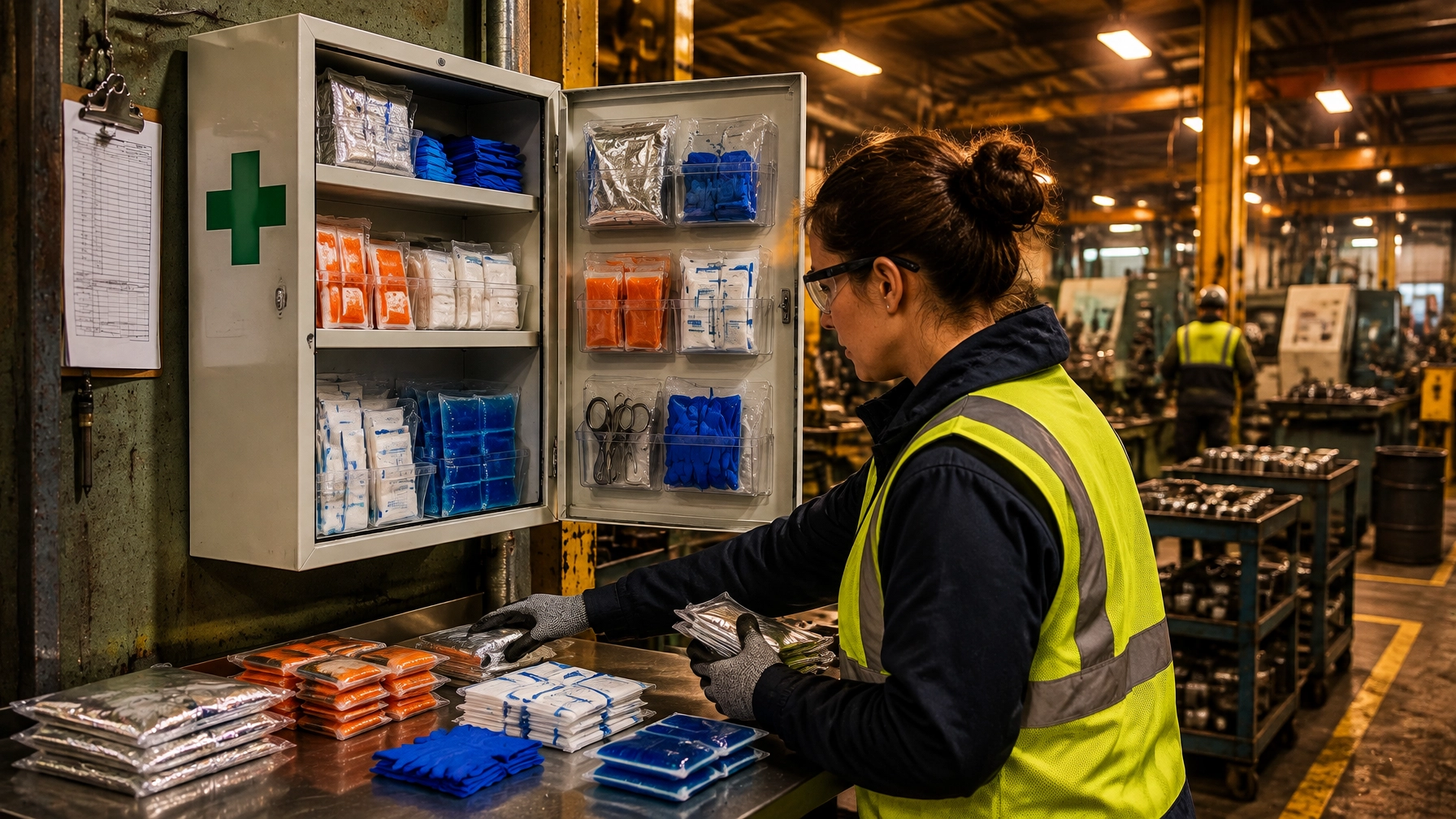
A first aid kit restocking service is a scheduled process for inspecting workplace cabinets and portable kits, replacing used or expired supplies, adding hazard-specific products, and documenting what was checked. Depending on the site, the service may cover:
The appropriate contents depend on the workplace’s hazards, employee count, layout, shifts, and distance from emergency medical care. OSHA requires adequate first aid supplies to be readily available when an infirmary, clinic, or hospital is not in near proximity, but it does not prescribe one universal kit for every business. Employers can use OSHA’s first aid standard and nonmandatory Appendix A as references when evaluating their program.
TJ Nowak Supply provides first aid delivery and restocking service for local workplaces that need a practical, recurring solution.
Your existing kit should remain stocked with core supplies such as adhesive bandages, sterile gauze, antiseptic applications, gloves, tape, scissors, and cold packs. Cold weather requires an additional review of supplies that help prevent heat loss and support an appropriate response to exposure.
Check whether each primary first aid station includes an intact thermal blanket. These compact blankets help reduce heat loss while an exposed worker is moved to a warm area or waits for medical assistance.
Place additional blankets in:
Inspect the packaging for tears, moisture damage, or contamination. A blanket stored in an open or damaged package may not be ready for use.

Chemical hand warmers can help employees maintain warmth during cold-weather operations, but they should be used according to the manufacturer’s instructions. Include enough for the expected crew size and inspect their expiration dates before placing them in kits.
Do not treat hand warmers as a substitute for a warm shelter, dry clothing, medical evaluation, or an established cold-stress response plan. They are supplemental supplies that should be available alongside proper cold-weather PPE and access to a heated recovery area.
A thermometer can help supervisors monitor conditions and identify when additional controls may be necessary. More importantly, each workplace should maintain written instructions for recognizing and responding to cold stress.
OSHA identifies hypothermia and frostbite as serious cold-weather hazards. Its cold stress guidance recommends moving an affected worker to a warm location, removing wet clothing, covering the worker with blankets, and seeking medical assistance.
Your first aid instructions should also clarify that:
Wet clothing increases heat loss, particularly for employees working outdoors, in unheated buildings, around water, or in snow and freezing rain. Store spare dry clothing near the first aid station or in a clearly labeled warming-supply bin rather than forcing every item into a small cabinet.
Useful additions include:
Choose supplies that match the work being performed. A road crew, warehouse team, and indoor manufacturing facility may require different quantities and types of seasonal equipment.
For workplaces with a designated warm-up area, consider keeping insulated cups, sealed drink packets, and access to hot water nearby. These supplies should be managed as part of the site’s cold-weather plan, not placed randomly inside a first aid cabinet.
The CDC and NIOSH cold-stress guidance can help safety managers review prevention, training, and response procedures. Warm drinks do not replace emergency care, and employees showing serious symptoms should be evaluated immediately.
Cold weather can increase the consequences of minor injuries. Numb fingers, wet packaging, and bulky gloves can make wound care more difficult, while slips on ice can result in larger abrasions or impact injuries.
During your seasonal review, increase quantities of:
Use sealed, moisture-resistant storage for outdoor or vehicle kits, and replace any packaging that has become damp, frozen, or damaged.
Cold-weather preparation is not limited to adding new items. Check whether existing supplies have been stored correctly and whether their expiration dates extend through the winter season.
Inspect:
Avoid storing first aid kits in unheated vehicles if freezing temperatures can damage the contents. Move vehicle kits into insulated, weather-resistant containers where appropriate, and verify that workers can access them without delay.
A first aid cabinet should also remain clearly marked, unobstructed, and accessible across every shift. If employees must ask a supervisor for a key or cross the entire facility to reach supplies, the location may not support an effective response.

Reactive restocking occurs after someone notices an empty bandage compartment, an expired burn dressing, or a depleted vehicle kit. That approach creates inconsistent coverage and leaves responsibility unclear.
A scheduled first aid kit restocking service gives businesses a repeatable process for:
Monthly inspections are a practical starting point for many workplaces, but higher-risk facilities may need more frequent checks. Restocking should also occur after a significant incident, after a kit is used, or when the facility adds new equipment or processes.
The cost of first aid kit restocking service depends on the number of kits, employee count, worksite hazards, shift coverage, required cold-weather additions, inspection frequency, and whether the service includes on-site delivery or a facility review.
A small office with one cabinet will have different requirements than a Fort Wayne manufacturer with multiple production areas, outdoor loading docks, vehicle kits, and several shifts. For that reason, a responsible provider should review the workplace before recommending quantities.
Businesses can order standard first aid supplies through the TJ Nowak Supply online workstore. For scheduled service, customized quantities, or a site-specific recommendation, use the TJ Nowak request service page.
Avoid these seasonal problems:
A seasonal hazard assessment should determine what each department needs. The correct solution for a warehouse may not be the correct solution for an outdoor contractor, utility crew, or manufacturing plant.
TJ Nowak Supply is a local provider of first aid supplies and scheduled service in Fort Wayne, IN, serving Northern Indiana and Angola. Coverage includes Columbia City, Auburn, Warsaw, Huntington, and surrounding communities, with custom logistics available for sites farther out.
When a cabinet is depleted before a scheduled visit, ask about fast turnaround or same-day availability. Local service can help businesses avoid delays caused by waiting for a national shipment or assigning emergency supply runs to facility staff.
TJ Nowak’s full-service team can also support related workplace needs, including public safety PPE and industrial protective equipment, fire protection, welding supplies, and jobsite services. Since 1946, the company has helped businesses keep essential safety products available and organized.
Review thermal blankets, chemical hand warmers, heat packs, thermometers, dry socks, gloves, hats, sterile dressings, examination gloves, and cold-stress response instructions. Some items may be stored beside the kit in a marked warming-supply area.
OSHA does not require one universal winter kit. It requires adequate first aid supplies based on workplace circumstances. Employers should evaluate cold exposure, outdoor work, facility temperature, remote locations, and access to medical care when selecting additional supplies.
Inspect kits on a regular schedule, commonly monthly, and restock them immediately after use. Facilities with multiple shifts, outdoor operations, or frequent injuries may need more frequent service.
Availability depends on the products and delivery location, but TJ Nowak Supply offers fast local service and can discuss same-day options for Fort Wayne and nearby Northern Indiana workplaces.
Yes. A first aid kit restocking service can include fixed cabinets, portable jobsite kits, service vehicles, trailers, and remote work areas. Ask for a review based on the number of employees, locations, and hazards.
Prepare your workplace before the first freeze instead of waiting for cold-weather exposure, a depleted kit, or an inspection to reveal missing supplies.
Get a quote today.
Call TJ Nowak Supply.
Order online for fast delivery in Fort Wayne.