As fall production schedules, construction deadlines, and facility maintenance projects accelerate across Northern Indiana, many businesses are reviewing their workplace safety programs. However, a first aid cabinet that is mounted on the wall but contains expired, missing, or unsuitable supplies does not provide an effective response plan.
A practical first aid kit restocking service helps Fort Wayne employers keep supplies available, organized, and appropriate for their actual workplace hazards. TJ Nowak Supply provides on-site first aid service, scheduled restocking, and workplace-specific supply recommendations for local businesses that need a reliable solution without assigning another recurring task to facility personnel.
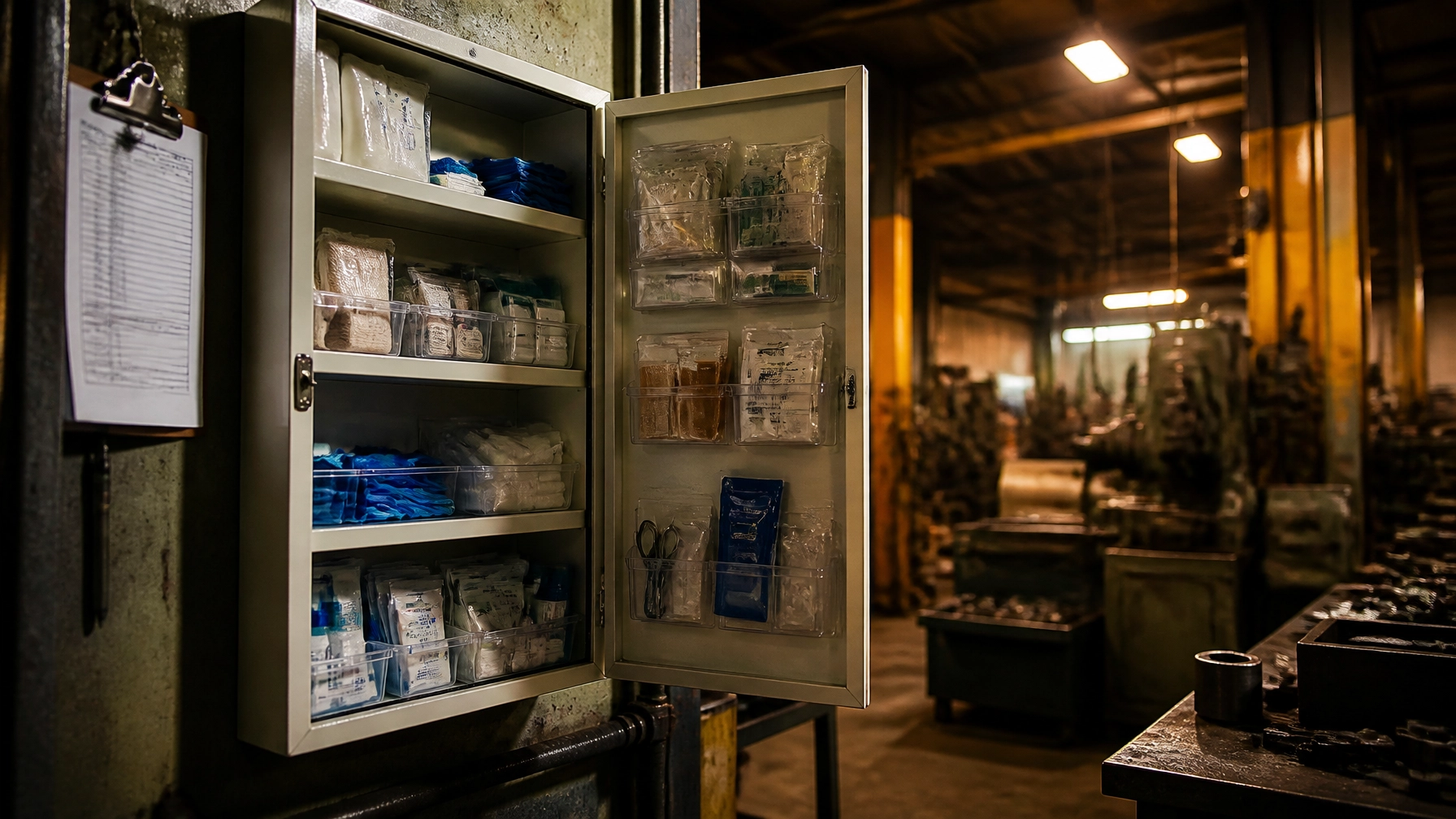
First aid kit restocking is the process of inspecting workplace kits, identifying missing or expired supplies, replacing used items, organizing the cabinet, and documenting the service visit. Depending on the facility, the program may include wall-mounted cabinets, portable kits, vehicle kits, jobsite kits, eyewash supplies, burn-care products, and bleeding-control equipment.
The correct contents depend on the workplace. An office, warehouse, welding shop, construction site, and manufacturing facility do not face the same risks and should not necessarily use the same kit.
TJ Nowak’s first aid delivery and restocking service is designed to help businesses evaluate those needs and maintain supplies on-site. As a family-owned local provider serving Fort Wayne since 1946, TJ Nowak can provide scheduled service as well as fast assistance when a kit must be replenished immediately.
OSHA’s general industry standard, 29 CFR 1910.151(b), requires adequate first aid supplies to be readily available when an infirmary, clinic, or hospital is not in near proximity. The standard also addresses trained first aid personnel.
OSHA does not require one universal first aid kit for every workplace, nor does it adopt ANSI/ISEA Z308.1 as a stand-alone mandatory kit standard. OSHA’s nonmandatory Appendix A and related interpretations use ANSI guidance as a useful reference for workplace first aid supplies.
ANSI/ISEA Z308.1 helps employers select kits by:
Class A kits are generally intended for basic, common workplace injuries. Class B kits are designed for higher-risk or more complex work environments, such as manufacturing, construction, warehouses, and industrial operations. A hazard assessment should determine whether additional supplies are necessary.
Use the following checklist during a monthly inspection. A monthly review is a practical best practice, particularly for facilities with multiple shifts, frequent kit use, or higher-risk operations. Kits should also be restocked after use rather than waiting for the next scheduled inspection.
Check whether bandages are present in several useful sizes and whether the wrappers remain sealed. Small cuts and scrapes are common, so adhesive bandages are often the first item depleted.
Common problems include:
Replace used or damaged bandages promptly, and select water-resistant options when employees work around liquids or outdoor conditions.
Gauze pads and absorbent compresses are essential for covering wounds and controlling bleeding. Inspectors and safety reviewers may look for adequate quantities, intact packaging, and sizes appropriate for the workplace hazards.
A small office kit may need only basic wound-care materials. A machine shop, fabrication facility, or construction site may require larger sterile dressings and additional bleeding-control supplies.
Antiseptic wipes and applications are frequently missing because they are used regularly and not replaced. Check expiration dates, sealed packaging, and the quantity remaining in each kit.
Do not assume that an old bottle or partially used container is an acceptable substitute. Restocking should provide clean, properly packaged supplies that employees can use immediately.
Burn gel, burn dressings, and related supplies are particularly important in welding, metalworking, food production, commercial kitchens, and other operations involving heat or hot surfaces.
Review whether the kit contains appropriate burn-care supplies for the hazards identified in the facility. Remove expired products and replace any packets or dressings that have been opened, damaged, or exposed to excessive heat.
Disposable gloves protect both the responder and the injured worker. Check for at least the appropriate number of pairs, intact packaging, and sizes suitable for the employees who may respond.
Nitrile gloves are commonly selected for workplace kits, but the correct choice depends on the facility’s operations and exposure concerns. Gloves should be replaced immediately when used, torn, contaminated, or past their expiration date.
Tape secures gauze and dressings, while triangular bandages can support an injured arm or help secure a dressing. These supplies are easy to overlook because they are not used as frequently as adhesive bandages.
Check that:
Scissors and tweezers should be present, clean, functional, and stored so they can be accessed quickly. Damaged tools or improvised replacements can slow down first aid response.
For industrial sites, the inspection should also confirm whether the kit requires additional tools or equipment based on the hazard assessment. A general-purpose kit may not be adequate for operations involving machinery, chemicals, welding, or outdoor work.
Eye and skin-wash supplies require special attention in facilities where employees may be exposed to corrosive materials. OSHA’s 1910.151(c) addresses suitable eyewash or flushing facilities for these hazards.
An eyewash bottle inside a first aid cabinet is not automatically a substitute for a compliant emergency eyewash station where one is required. Check expiration dates, accessibility, signage, and whether the flushing equipment is located within the work area for immediate use.
Instant cold packs, emergency blankets, and other supplemental items may be needed depending on the facility’s hazards and response plan. Cold packs are regularly used for strains, sprains, and minor impact injuries, while emergency blankets may be useful in outdoor or unheated work environments.
These items should be selected based on the workplace rather than added randomly. A professional restocking service can identify where standard kit contents need to be supplemented for construction, transportation, manufacturing, or emergency-response operations.
A complete first aid program requires more than supplies inside a cabinet. Check that each kit is:
Maintain documentation showing the inspection date, person responsible, supplies replaced, expiration dates reviewed, and corrective actions completed. This record helps demonstrate that the company is actively maintaining readily available first aid supplies.

A scheduled service is useful when:
Restocking is also needed after any significant incident or after employees use supplies from the kit. Waiting for a monthly inspection can leave the cabinet incomplete when another injury occurs.
There is no responsible single price for every workplace. The cost of first aid kit restocking service depends on the number of cabinets, employee count, work shifts, kit class and type, usage volume, required hazard-specific supplies, inspection frequency, and whether on-site service or delivery is needed.
A small office with one basic kit will have different needs than a Fort Wayne manufacturer with several production areas, eyewash stations, burn hazards, and multiple shifts. TJ Nowak Supply can review the facility and provide a quote based on actual requirements rather than selling a generic package.
For standard first aid supplies, businesses can also order through the TJ Nowak Supply online workstore. For scheduled service, custom quantities, or a site assessment, use the TJ Nowak request service page or contact the team directly.
Avoid these recurring problems:
TJ Nowak Supply provides local first aid kit restocking and supply support in Fort Wayne and throughout Northern Indiana. Service coverage includes Columbia City, Auburn, Warsaw, Huntington, and Angola, with custom logistics available for sites farther out.
When a kit is depleted before the next scheduled visit, ask about fast or same-day availability. Local service can reduce delays compared with waiting for a national vendor or placing multiple small online orders. TJ Nowak’s full-service team can also support related workplace needs, including industrial safety and PPE, fire protection, welding supplies, and jobsite services.
No. OSHA requires adequate first aid supplies to be readily available under the circumstances described in 1910.151(b), but it does not mandate one universal kit for every workplace. ANSI/ISEA Z308.1 is industry guidance that can help employers select and maintain appropriate kits.
A monthly inspection is a practical best practice for many workplaces, especially those with frequent use or higher hazards. Kits should also be checked after use, after relocation, and whenever workplace processes change.
Possibly. Class B kits are intended for higher-risk or more complex environments, but the correct selection depends on the facility’s hazard assessment, size, layout, employee coverage, and response plan.
A professional service should identify and replace expired supplies, used items, damaged packaging, and products that no longer match the workplace’s needs. Confirm the exact scope when requesting a quote.
Yes. TJ Nowak Supply offers on-site first aid kit restocking and scheduled maintenance for local businesses, with service options throughout Northern Indiana and Angola.
For a practical first aid kit review, fast local restocking, or a scheduled maintenance plan, contact TJ Nowak Supply. Our family-owned Fort Wayne team has supported local workplaces since 1946 and can help keep your kits organized, accessible, and ready for use.
Get a quote today.
Call TJ Nowak Supply.
Order online for fast delivery in Fort Wayne.